
News
EASIGEN-DS consortium launches hybrid advanced course on long-read sequencing and medical genomics
On October 2nd the Advanced course on long-read sequencing and medical genomics took place at KULeuven, marking the first training event led by the EASIGEN-DS consortium. Co-organised by the EU-funded project EASIGEN-DS and KU Leuven as part of the Flemish inter-university course for the Support of Young Researchers (Omkadering van Jonge Onderzoekers), this hybrid event brought together nearly 100 participants onsite, around 300 remote from around the world and experts in genomics as speakers from renowned European institutions such as CRG, Charité, KU Leuven, VIB, SciLifeLab, Uppsala Universitet, University of Antwerp, Berlin Institute of Health, Ghent University, KTH, MDC, Genomics Core Leuven, and CNAG.
Opening the course, Joris Vermeescher (Head of Laboratory for Cytogenetics and Genome Research at KULeuven) welcomed participants and highlighted the collaborative nature of the course and the goal of EASIGEN-DS to provide training and support to young researchers to fully explore the potential of the genomics on the biomedical field.
The course began with “Block 1: Technologies and data analysis” with the presentation of the first speaker, Wouter Bossuyt (Manager of the Genomics Core Leuven, Center for Human Genetics, KULeuven), that explored the latest updates on long-read sequencing techniques, followed by Mojca Strazisar (Head of the Neuromics Support Facility, Center for Molecular Neurology, VIB) who discussed best practices on good library preps for Oxford Nanopore sequencing. Kristin Köhler (Bioinformatician/PhD Student at Berlin Institute of Health and Charité) shared her talk focused on analysis of long-read RNA-sequencing data and Teresa D'Altri (Scientific Project Manager and Coordinator at CRG/EGA) concluded the block with a presentation on data sharing and management, including a live demo on the usage of EGA.
In the afternoon, “Block 2: Applications in medical genomics” explored the clinical applications of long-read sequencing. The first speaker of the block was Janine Altmüller (Head of the Genomics Platform at Berlin Institute of Health and MDC) that highlighted the benefits of applying long-read sequencing on rare kidney diseases, followed by Pedro M. Rodríguez Cruz (La Caixa Junior Fellow at CNAG) who explained how long-read sequencing help understand the diversity of neuromuscular disorders in African populations. Joris Vermeesch (KULeuven) delivered his talk on using Nanopore sequencing to investigate developmental disorders, followed by Nelson Martins (PhD Student at Ghent University) who delivered the first flash-talk of the day focused on Hi-C and CiFi and their applications. Robert Månsson Welinder (Associate professor at Karolinska Institutet and Head of Unit at NGI at SciLifeLab, KTH) dived into personalised treatment for multiple myeloma through HiFi long-read whole genome sequencing after that, Laurens Lambrechts (Postdoctoral fellow at VIB/KU Leuven) explained the application of Fiber-sequencing in hematologic cancer. Henrik Gezelius (Researcher at NGI at SciLifeLab, Uppsala University) focused on the analysis of leukaemia fusion gene expression at single cell level and closing the session was the last flash-talk delivered by Marta Sousa Santos (PhD student at KULeuven) on Iso-Seq analysis of 22q11.2DS family trios.
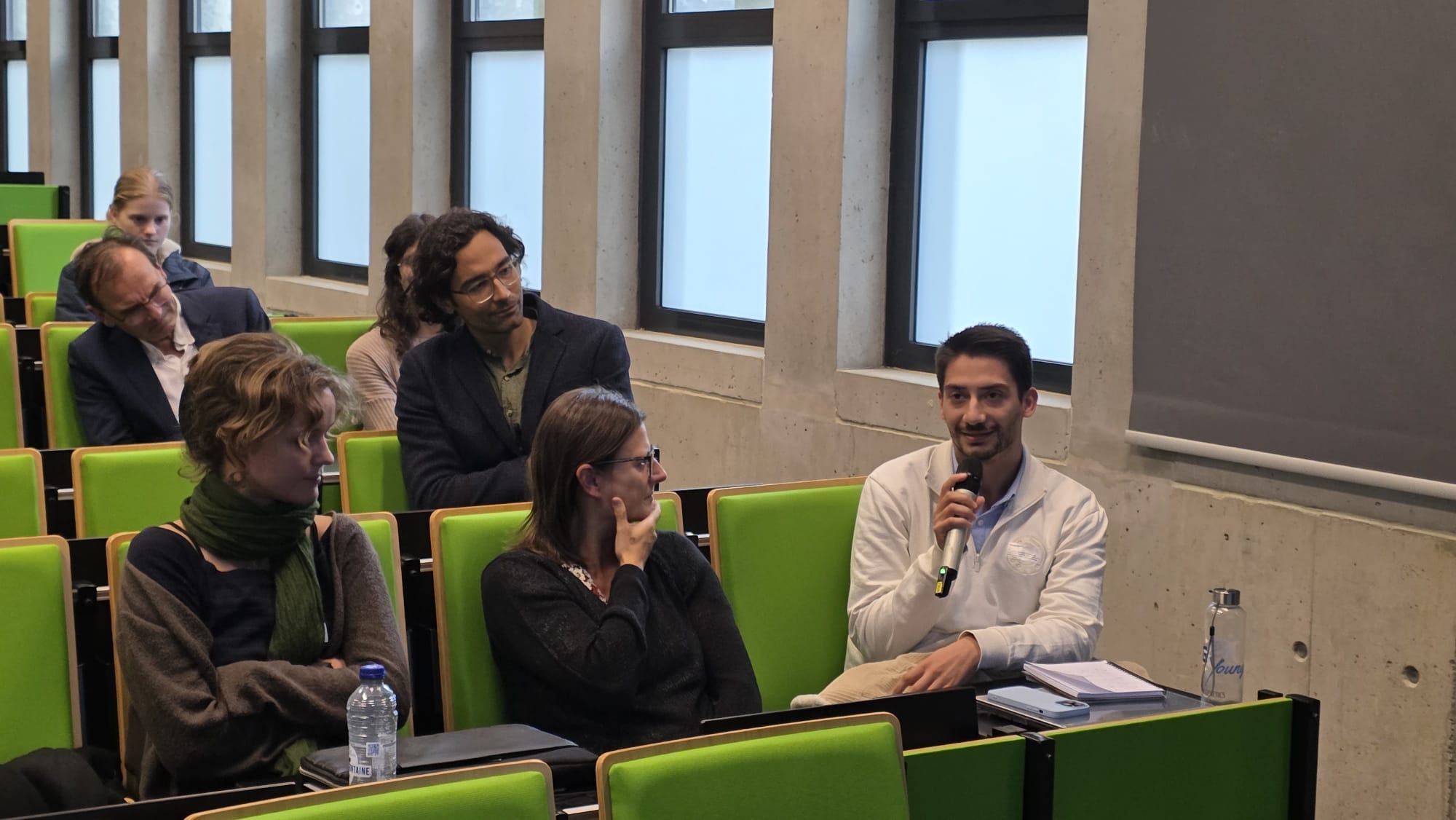
The day concluded with “Block 3: Ask the experts” a dynamic session that allowed participants, both online and in person, to engage directly with the speakers, deepening their understanding and wrapping up a full day of knowledge.
As the first in a series of training initiatives planned by the EASIGEN-DS consortium this course set the foundation for future achievements. It not only highlighted the importance of exchange and collaboration between institutions, a strong principle of the EASIGEN-DS vision, but also demonstrated the consortium’s commitments to one of its missions, supporting researchers by sharing the expertise, resources and knowledge of its diverse nodes of the consortium. In doing so, the consortium also contributes to building Europe’s future in genomics.

*If you have any inquiries regarding this news item, feel free to reach out at contact@easigen.eu